Frequently Asked Questions – Dry Fruits, Nuts & Seeds
Frequently Asked Questions – Giriwala Nut House
Everything you need to know about dry fruits, nuts, seeds, dates, gifting and ordering from Giriwala. These answers are research-backed and updated regularly.
About Dry Fruits & Nutrition
What are the healthiest dry fruits to eat daily?
The healthiest dry fruits for daily consumption are Almonds, Walnuts, Cashews, Pistachios and Raisins. Almonds provide 20–25g protein per 100g and the highest dietary Vitamin E among all foods. Walnuts contain 9.1g Omega-3 ALA per 100g — the highest plant-based Omega-3 among all common nuts. Cashews are rich in Copper and Magnesium. Pistachios are the lowest-calorie nut and clinically proven to reduce blood pressure. A daily handful of mixed dry fruits (30g) delivers protein, healthy fats, fibre, iron and essential micronutrients in one snack.
How many dry fruits should I eat per day?
The recommended daily serving is 30g of mixed dry fruits and nuts — roughly one small handful. This typically means 5–7 almonds, 2–4 walnuts, 4–6 cashews and a small pinch of raisins. For specific nuts: Brazil nuts are limited to 1–3 per day due to their high selenium content (68–91 mcg per nut against a 55 mcg daily requirement).
Are dry fruits good for weight loss?
Yes, when consumed in the correct portion. Almonds trigger a 47% lower insulin response than carbohydrate snacks, reducing hunger hormones naturally. Pistachios have the lowest calorie count among all nuts at 160 kcal per 30g serving. Flax seeds and Chia seeds form a satiety-creating gel in the stomach that reduces total daily calorie intake. The key is portion control — 30g per day, not unrestricted consumption.
Which dry fruit is best for brain and memory?
Walnuts are the number one brain food among all nuts. Their high Omega-3 ALA content (9.1g per 100g) supports brain cell membrane health and cognitive function. The MIND Diet research links 5 walnut servings per week to a 53% reduction in Alzheimer's risk. Almonds contain L-Carnitine and Riboflavin, both linked to improved brain function. Chilgoza Pine Nuts contain rare Pinolenic acid found in no other common food, supporting neurological health.
Which dry fruit has the most iron?
Munakka (large dried grapes with seed) and Black Kishmish (black raisins) have among the highest iron content of all dry fruits. Anjeer (Dried Figs) and Dates are also excellent iron sources. The traditional Ayurvedic protocol for iron deficiency is soaking 15–20 black raisins or 7–10 Munakka overnight and eating them with the soaking water on an empty stomach every morning.
What is the difference between Ajwa, Kalmi Safawi and Medjoul dates?
These are three distinct premium date varieties. Ajwa grows exclusively in Medina, Saudi Arabia, is smaller, darker and has the highest polyphenol antioxidant content of all date varieties. It is deeply revered in Islamic tradition. Kalmi Safawi is a semi-dry Saudi variety with a firm texture and deep caramel flavour — easier to handle than sticky varieties. Medjoul is the largest date variety in the world, with a soft fudgy texture and the richest natural sweetness — often called the King of Dates. Each has a distinct flavour, texture and nutritional profile.
What is Gurbandi Badam? Is it better than Californian almonds?
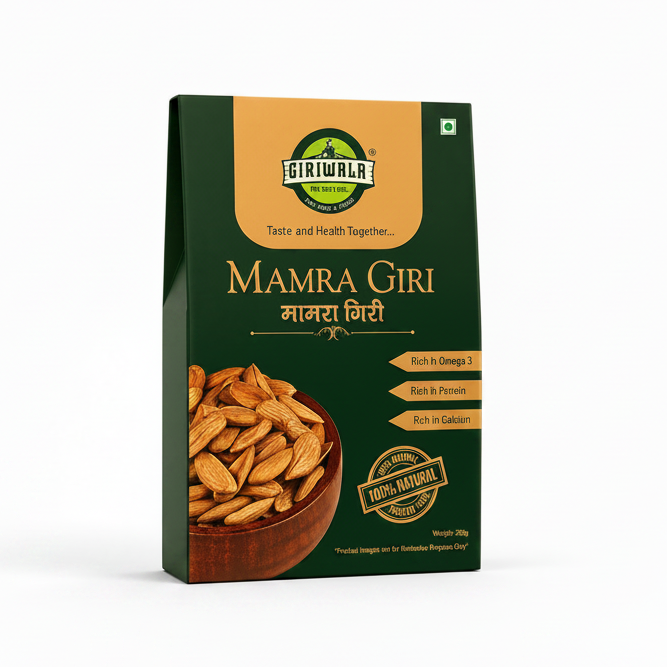
Gurbandi Badam (also called Gurbandi Giri or Desi Badam) is a traditional Indian almond variety grown wild in Afghanistan and Himachal Pradesh. It is smaller than Californian almonds but contains a higher oil concentration, more phytonutrients per gram, and a slightly bitter taste from natural Amygdalin compounds. Ayurvedic medicine has prescribed Gurbandi specifically for brain health, bone strength and skin nourishment for centuries. Mamra Giri is another wild Afghan almond variety with similarly high oil content. Californian almonds are larger, more uniform and the basis for most global almond nutritional research. Both are excellent — they serve different purposes.
What is Makhana (Fox Nuts)? Is it healthy?
Makhana (Lotus Seeds or Fox Nuts) is a traditional Indian superfood popped from lotus seeds grown in Bihar's freshwater lakes. It contains only 347 kcal per 100g — significantly lower than nuts at 550+ kcal. With 9.7g protein per 100g and a Glycaemic Index of 53, it is one of the best low-calorie, diabetic-friendly snacks available. It contains Kaempferol, a rare flavonoid with anti-ageing and anti-inflammatory properties. Roast in ghee with salt and spices at home for best results.
What are Sabja Seeds (Basil Seeds)? How are they different from Chia Seeds?
Sabja seeds (also called Tukmaria or Sweet Basil seeds) are India's original superfood drink ingredient, used in falooda and sharbat for centuries. They swell 30x their size in just 5–10 minutes (vs chia's 10x in 30+ minutes), have a documented body-cooling property (chia does not), and cost a fraction of imported chia seeds. Both provide gel-forming soluble fibre, Omega-3 ALA and calcium. For Indian consumers, Sabja is the more practical and economical choice.
About Ordering & Delivery
Does Giriwala ship across India?
Yes. Giriwala delivers across the majority of cities and towns in India. Orders are processed and dispatched within 1–2 business days from our facility in Kaithal, Haryana (136027). Please note that a small number of remote areas where courier partners do not provide service may not be serviceable — you will be informed at checkout if your pincode is not covered.
How should I store dry fruits at home?
Store all dry fruits in airtight containers in a cool, dry place away from sunlight and moisture. For extended shelf life: Almonds, Cashews, Walnuts — refrigerate for up to 12 months. Dates — refrigerate for up to 12 months. Raisins — refrigerate for up to 9 months. Figs (Anjeer) — refrigerate for up to 6 months. Pine Nuts (Chilgoza) — refrigerate and consume within 3 months. Makhana — airtight container, room temperature, keep away from moisture.
What is the shelf life of Giriwala products?
Most Giriwala dry fruit products have a shelf life of 6–12 months from the date of manufacture when stored correctly. All packs carry a clearly printed best-before date. Opened products should be transferred to an airtight container and consumed within 1–3 months depending on the product type.
About Gifting
Does Giriwala offer corporate gift hampers?
Yes. Giriwala offers a range of curated premium dry fruit gift hampers ideal for Diwali, Eid, corporate gifting, weddings, birthdays and client appreciation. Our gift range includes the Classic Dry Fruits Gift Hamper (1 Kg), Luxury Dry Fruits Gift Box (1.25 Kg), Blue Edition Gift Hamper (750g), Premium Gift Tray (1.25 Kg), Eco Jute Gift Pack (1.5 Kg) and Cocktail Party Gift Pack (1 Kg). Bulk corporate orders are accepted with custom branding options available.
Which Giriwala gift pack is best for Diwali?
For Diwali gifting, the most popular options are the Giriwala Classic Dry Fruits Gift Hamper (1 Kg, ₹1,749) for traditional gifting, the Luxury Dry Fruits Gift Box (1.25 Kg) for premium corporate clients, and the Blue Edition Gift Hamper (750g, ₹1,199) for compact, impressive gifts under ₹1,200. The Eco Jute Gift Pack (1.5 Kg) is ideal for eco-conscious recipients.